

Conch Piercing: Everything you need to know before getting started
Looking for a piercing that's out of the ordinary yet still elegant? The conch piercing is undoubtedly the one for you. Placed in the center of the ear, it offers a unique space to express your style, whether you prefer discreet studs or statement rings.
But be aware: its central position in the cartilage requires some knowledge before making an appointment. Pain, cost, healing... we'll tell you everything.
1. What is a Conch piercing?
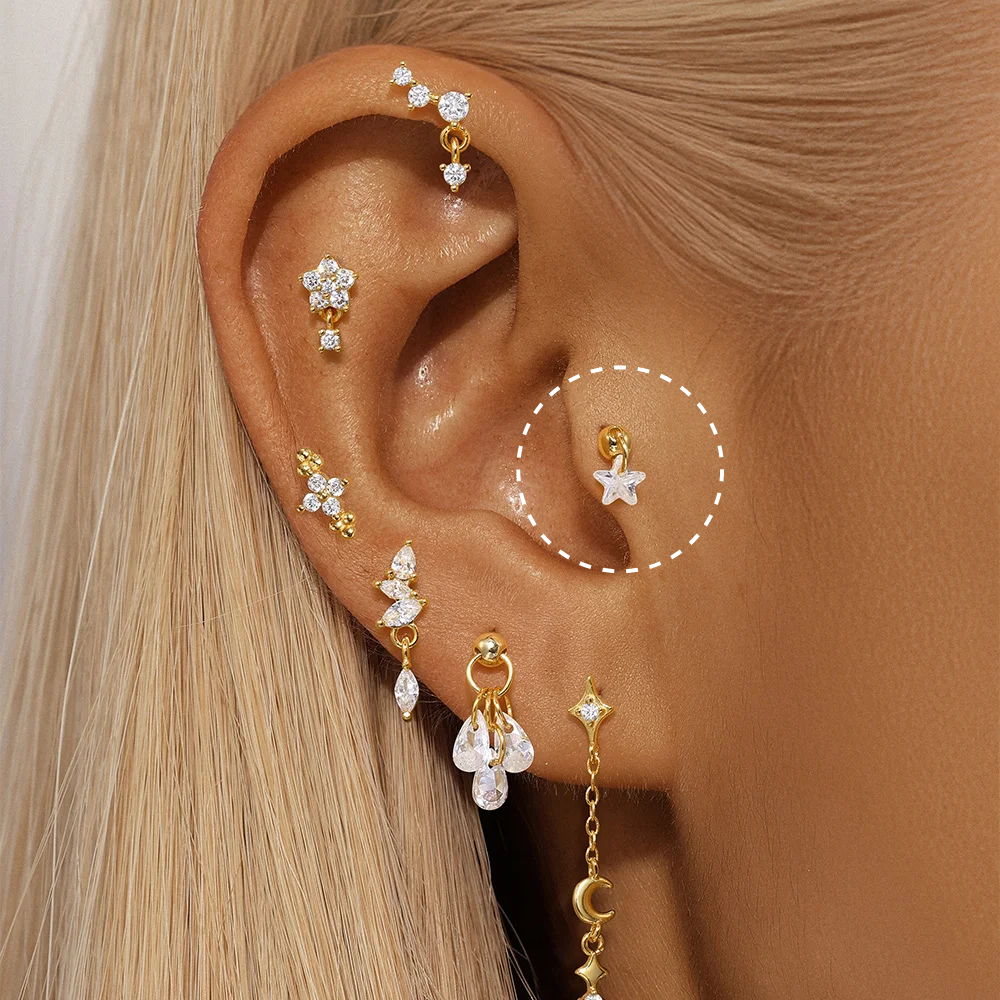
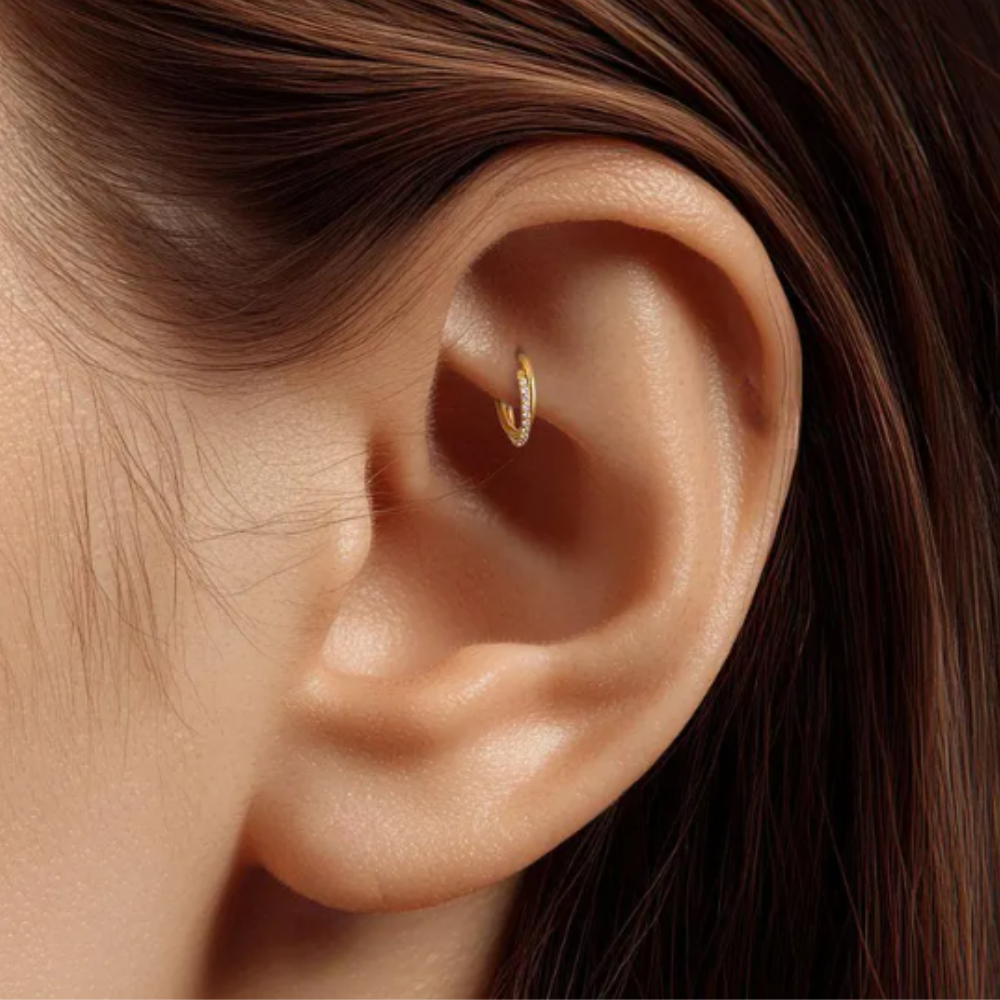
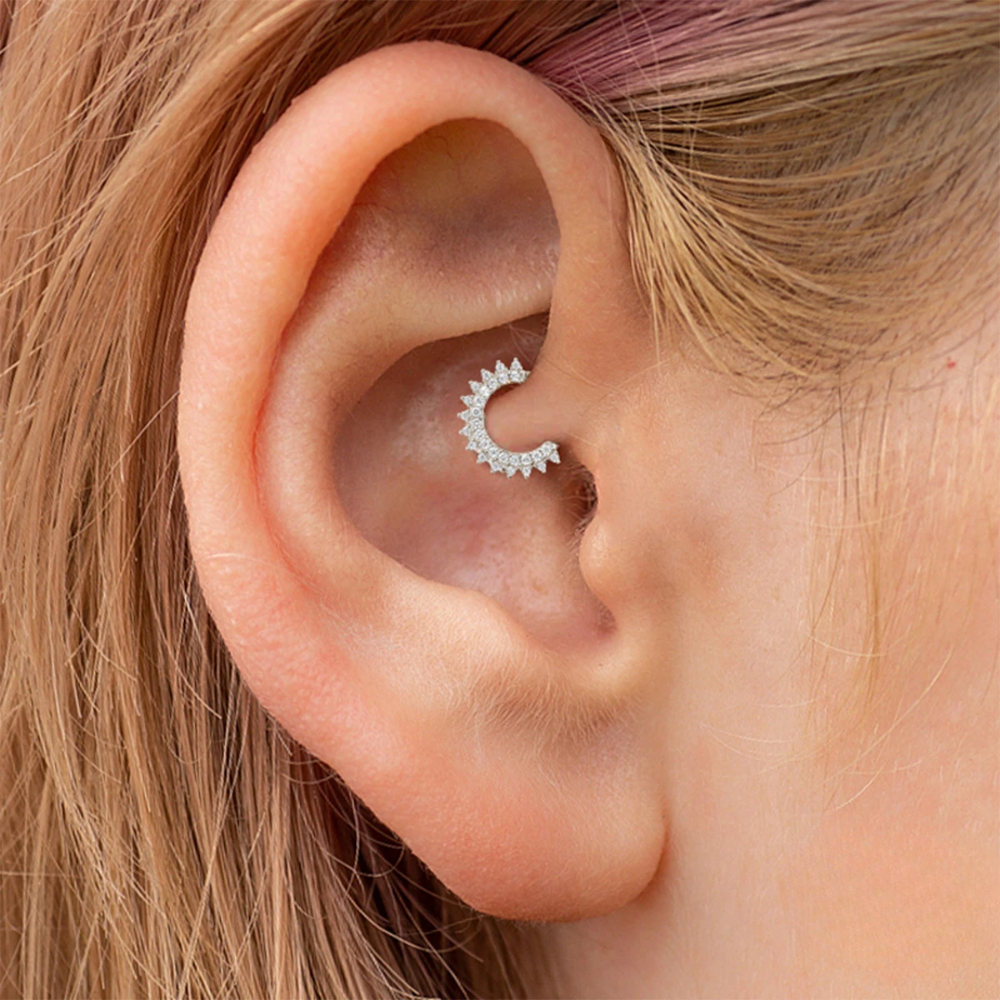
The "Conch" ear (or conch in French) gets its name from the shape of the inner ear, which resembles that of a seashell. There are two types of ear placement:
-
The Inner Conch: The most common. It is located in the hollow part, in the middle of the ear. A stud with a rhinestone or a bead is usually worn there.
-
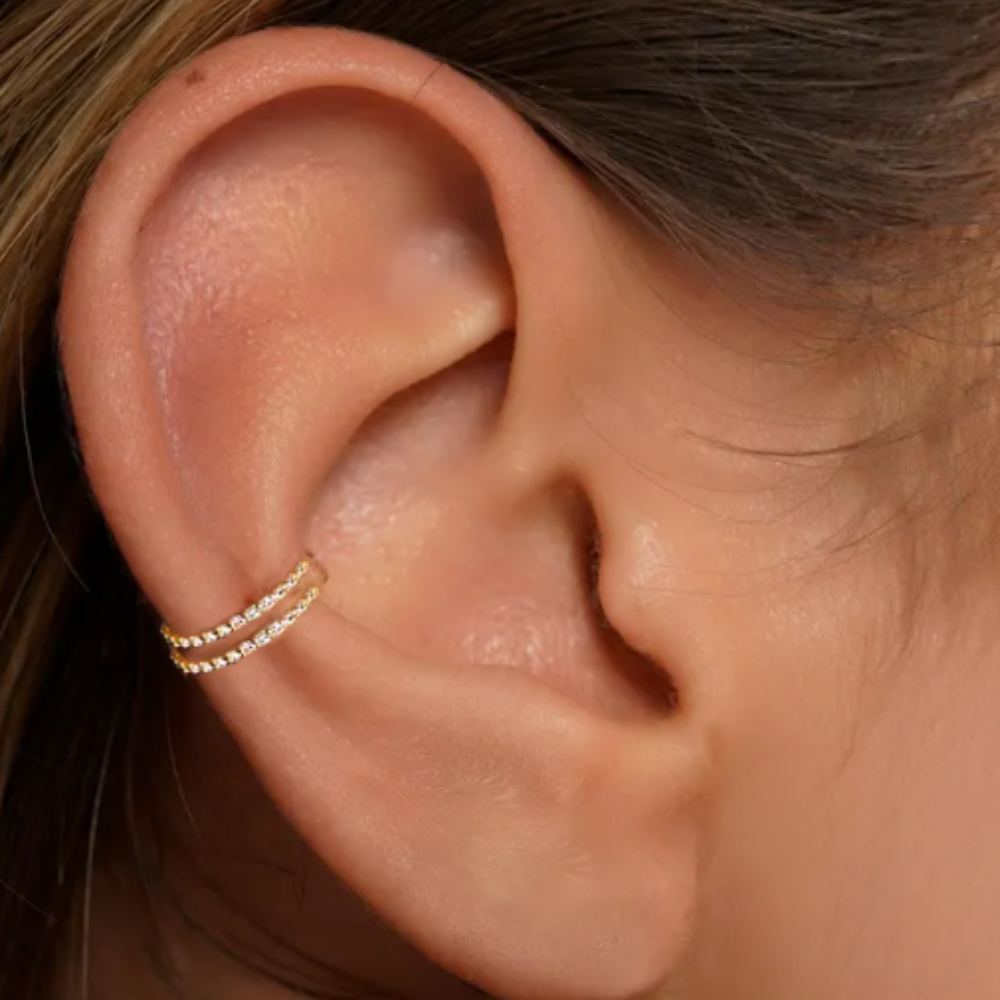
The Outer Conch: Positioned slightly higher, on the flat part of the cartilage. It is ideal for those who wish to wear a large ring that goes all the way around the ear.
2. Pain: Does it hurt?
On the pain scale, the Conch is often rated at 5/10 .
Because it goes through the thickest part of the cartilage, the sensation is more intense than with a helix piercing. You will feel a distinct pressure at the moment of piercing, followed by a throbbing sensation (your ear feeling hot) for one to two hours.
The trick: The pain is very quick (less than 2 seconds). The most striking thing is sometimes the little "crackling" sound you hear when the needle passes through, which is perfectly normal.
3. Healing: A smooth, easy process?
The cartilage of the conch is thick and deep, which protects it from external snagging (unlike the helix), but also slows down blood circulation.
-
Average healing time: 6 to 12 months.
-
Jewelry change: Wait at least 3 to 4 months before asking your piercer to reduce the size of the bar (downsize).
4. Stud or Ring: The Dilemma of Your First Piece of Jewelry
This is the most common mistake: wanting to fit a ring on the first day. Why you should start with a stud (straight bar):
-
Stability: A ring rotates, moves, and brings bacteria back inside the hole.
-
Swelling: Cartilage needs room to swell. A ring may compress the tissues and create scar tissue growths.
Expert advice: Start with a titanium labret piercing. Once healing is well underway (approximately 6 months), you can switch to a ring for that sought-after "wrap" look.
5. Specific maintenance tips for the Conch
In addition to standard care (saline solution), the Conch requires two special precautions:
-
Be careful with headphones: Depending on your ear shape, in-ear headphones (like AirPods) can put pressure on the jewelry and cause sharp pain or inflammation. Avoid them for the first few weeks.
-
The phone: Regularly clean your smartphone screen, as it is a direct vector of bacteria to your new piercing.
6. How much does a conch piercing cost?
The price varies depending on the salon and the type of jewelry chosen (steel or titanium). On average, expect to pay between €40 and €60 , including the piercing procedure and the jewelry.
Conclusion
The conch piercing is a true aesthetic statement. Although it requires some discipline during the year of healing, it is one of the most rewarding piercings thanks to its central position which attracts all eyes.