

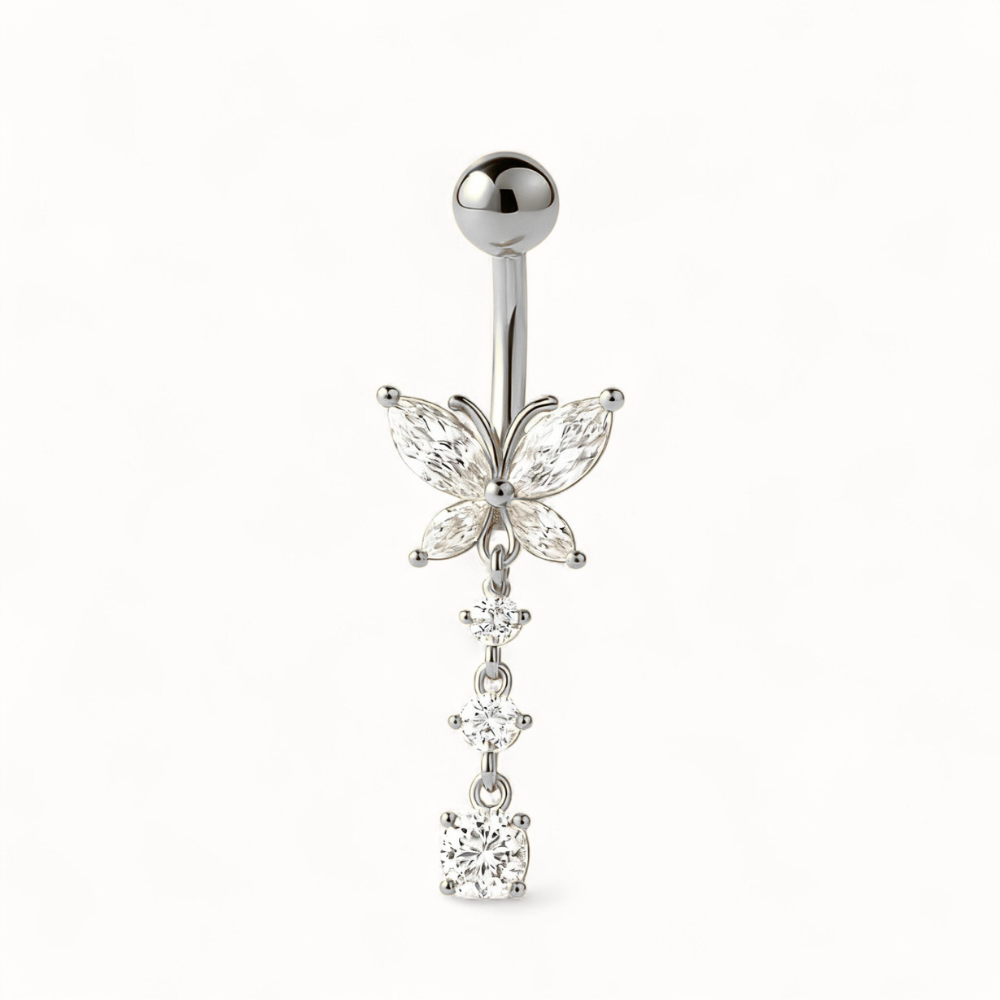
Hypoallergenic piercing: myth or reality?
It's the magic word you see everywhere, from pharmacies to costume jewelry shops: "Hypoallergenic." For many people with sensitive skin, it's the promise of a piercing without redness, itching, or pain.
But behind this marketing term lies a more complex reality. Can a piece of jewelry truly guarantee zero allergies? Is it simply a sales pitch or a serious certification? We separate fact from fiction.
1. What does "Hypoallergenic" actually mean?
The prefix "hypo" means "less." Therefore, hypoallergenic jewelry is designed to minimize the risk of allergies , but it does not guarantee absolute safety for 100% of the population.
In traditional jewelry, this term is often used to refer to nickel-free jewelry, as nickel is the primary cause of contact dermatitis. However, the term is not strictly regulated, which leaves room for many abuses.
2. The culprit #1: Nickel
If your piercing itches, becomes red or oozes, there is a good chance that your body is reacting to nickel.
-
The problem: It can be found everywhere, even in so-called "surgical" steel or in low-quality gold (9k).
-
The danger: Once you develop a nickel allergy, your body remembers it for life. Each new contact will trigger a faster and more intense reaction.
3. Materials that are "true" guarantees
For a piece of jewelry to be truly safe, it must not only be labeled "hypoallergenic," it must be biocompatible . Here are the materials you can rely on with complete confidence:
Titanium Implant Grade (ASTM F-136)
It's the gold standard. Used in surgery for implants, it contains 0% nickel. The body almost never rejects it. It's the only material recommended for ultra-sensitive skin.
14k or 18k gold (nickel-free)
Pure gold (24k) is too soft. It is therefore mixed with other metals. High-quality gold intended for piercing is alloyed with precious metals such as silver or palladium, excluding nickel from the mixture.
Niobium
Less well-known but just as effective as titanium, niobium is a pure metal that contains no allergenic alloys. It is particularly valued for its naturally dark colors.
4. The "False Friends" of Piercing
Beware of labels that conceal questionable ingredients:
-
925 Sterling Silver: It often contains copper, which oxidizes and irritates the skin. It is never considered hypoallergenic for a fresh piercing.
-
Gold Plating: The thin layer of gold eventually wears away, exposing your skin to the base metal (often brass or copper), triggering an allergy.
-
316L Surgical Steel: Although widely used, it contains traces of nickel which may be enough to cause a reaction in the most sensitive skin.
Comparison: What level of safety is best for your skin?
5. How can you tell if you have an allergy?
Don't confuse an infection (pus, heat, fever) with an allergy. The signs of an allergic reaction to metal are generally:
-
A persistent itching .
-
Skin that becomes dry and flaky around the hole.
-
A redness that takes exactly the shape of the jewel.
Conclusion: Myth or Reality?
Hypoallergenic piercings are a reality , provided you don't rely on the label, but on the material . For complete safety, forget marketing promises and insist on implant-grade titanium . This is the only way to guarantee that your new jewelry will remain a pleasure, and not a source of irritation.