

Why is ASTM F-136 titanium the absolute standard in piercing?
When you walk through the door of a professional piercing studio, one name keeps coming up: ASTM F-136 Titanium . This isn't just a marketing ploy; it's a medical safety standard.
While surgical steel has long dominated the market, implant-grade titanium is now the top choice of experts. Here's why this metal makes all the difference for your skin's health.
1. Total biocompatibility (Zero Nickel)
The main cause of irritation and healing failure is nickel allergy.
-
The problem with steel: Even 316L surgical steel contains traces of nickel. For a sensitive person, this constant contact with an open wound can trigger chronic redness and swelling.
-
The Titanium Solution: ASTM F-136 titanium is completely nickel-free . It is considered bio-inert, meaning your body does not recognize it as a threat and does not attempt to reject it.
2. A standard originating from the medical community
The ASTM F-136 code is not simply a catalog reference. It is a medical industry standard that defines the exact composition of the titanium alloy used for surgical implants (hip prostheses, bone screws, pacemakers).
By choosing this material for your piercing, you are wearing a piece of jewelry of the same quality as a medical device intended to remain inside the human body for a lifetime.
3. Lighter, stronger
Titanium possesses exceptional physical properties:
-
Lightweight: It is approximately 50% lighter than steel . For a new piercing, less weight means less tension on delicate tissues, promoting faster healing.
-
Extreme durability: It won't oxidize, tarnish, or resist bodily fluids (lymph, sweat) perfectly. Unlike silver, it will never leave an indelible black mark on your skin.
4. The aesthetic advantage: Anodizing
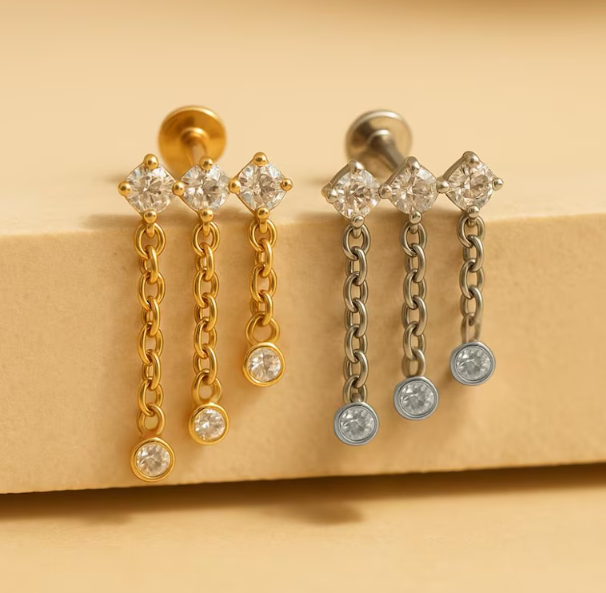
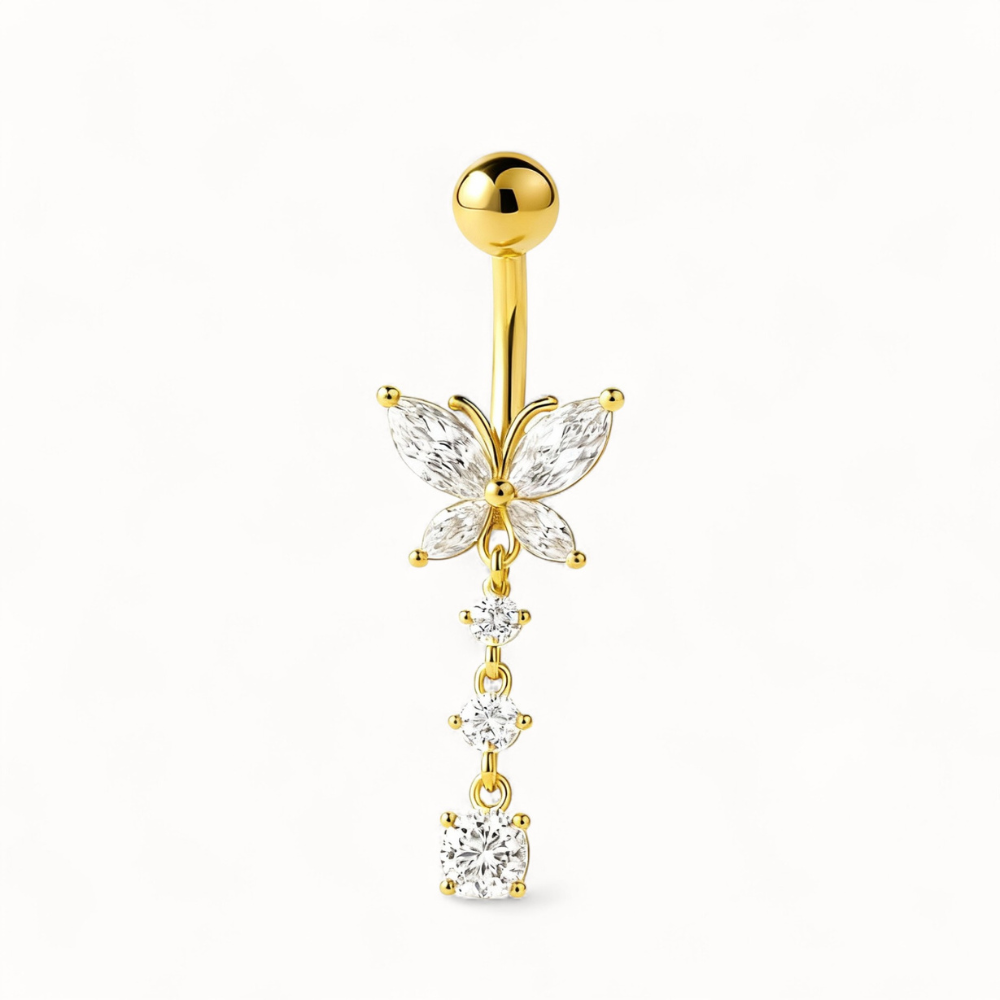
Unlike steel, which remains silvery-grey, titanium can be anodized . This is not a paint (which could flake off and infect the hole), but an electrolytic process that modifies the oxide layer on the surface of the metal to reflect light differently.
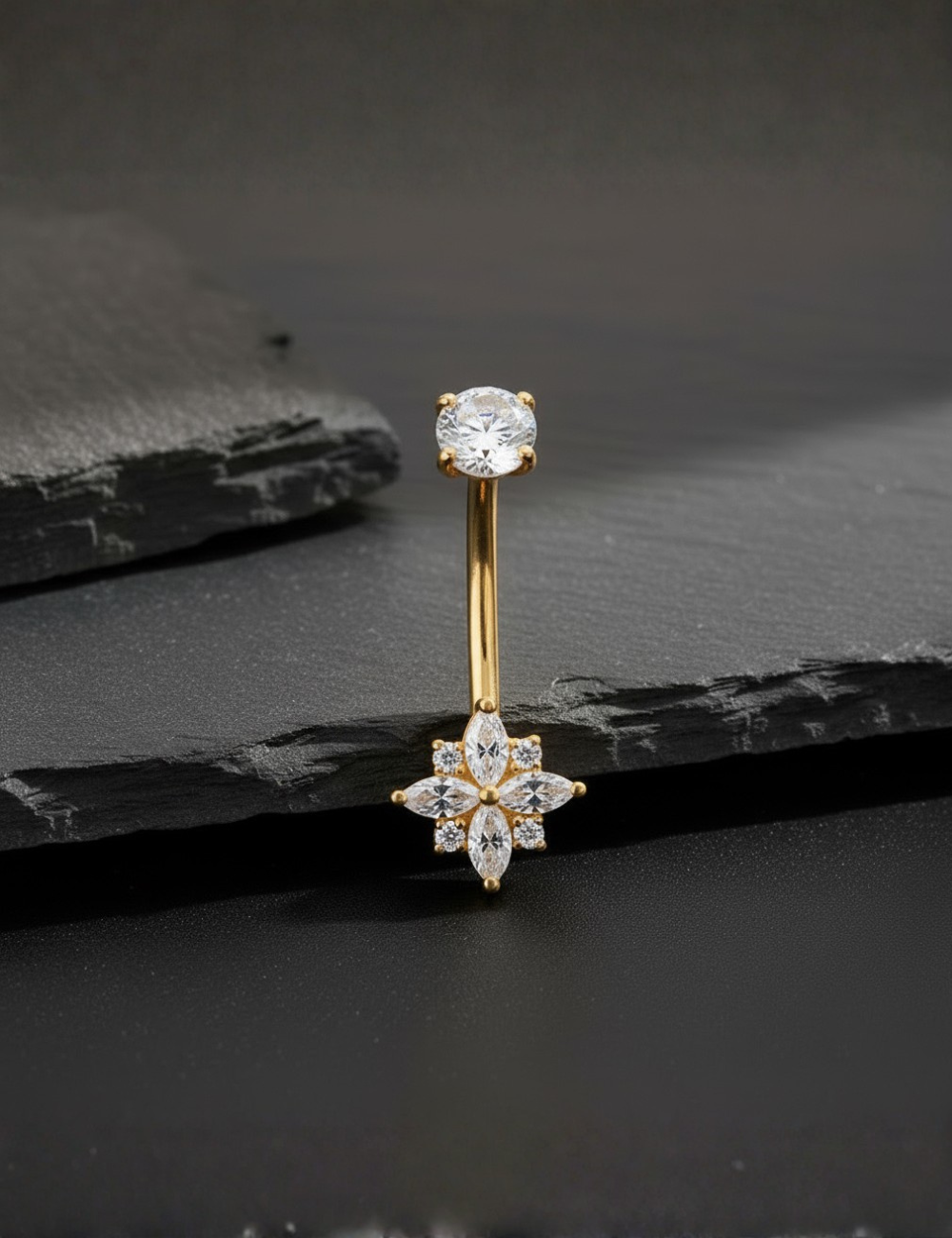
This allows for jewelry in all colors: gold, rose gold, blue, purple, bronze... while retaining the hypoallergenic properties of the raw metal.
Comparison: ASTM F-136 Titanium vs. Surgical Steel
Conclusion
Investing a few extra euros in ASTM F-136 titanium jewelry for your piercing is the best decision you can make. You drastically reduce the risks of infection, rejection, and complications, while providing your body with the safest material in the world.
Pro tip: Always ask your piercer if they use ASTM F-136 certified titanium. A reputable professional will be happy to show you their certificates of conformity.