

Everything you need to know before getting your first piercing: the ultimate guide
Getting your first piercing is an exciting step, but it's often accompanied by a mixture of impatience and apprehension. Between advice from friends, internet urban legends, and the fear of pain, it's easy to get lost in the process.
To ensure this experience remains a great memory, here is everything you need to know before walking into a studio , from preparation to choosing the professional.
1. Choosing the right professional (Criterion #1)
Choosing a piercer is more important than choosing jewelry. A good studio isn't just about its decor, but also its hygiene .
-
Needle, not gun: That's the golden rule. Guns are impossible to sterilize and tear tissue. A professional uses only sterile, single-use needles .
-
Visiting the shop: Feel free to come in and ask questions. The place should be clean, well-lit, and have a separate drilling room.
-
The feeling: A good piercer should explain the procedure to you, ask if you have eaten and show you the jewelry for the initial piercing.
2. Pain: let's talk about it frankly
Let's be honest: a piercing is a needle going through the skin, so yes, you feel something . But the pain is:
-
Extremely brief: It lasts less than two seconds.
-
Bearable: Most people compare it to a blood test or a sharp pinch.
Stress is often much more intense than the actual pain. Breathe, don't come on an empty stomach, and everything will be fine!
3. Choosing the posing jewelry
When getting your first piercing, you won't be able to wear just any piece of jewelry.
-
The material: To avoid any allergy, demand Implant Grade Titanium (ASTM-F136) .
-
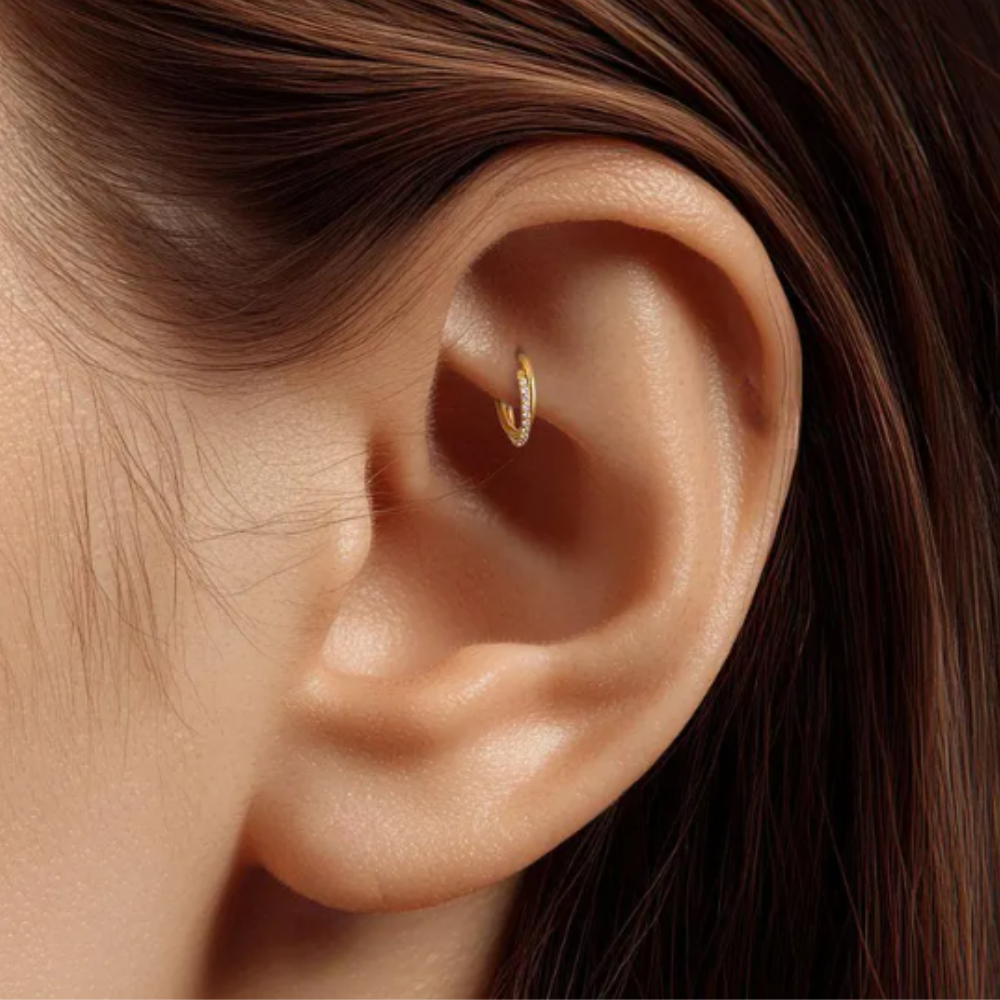
The shape: We often start with a straight bar (labret) rather than a ring, because it moves less and promotes straight and rapid healing.
-
Size: The initial jewelry is intentionally longer to allow for initial swelling. You will need to return to have it shortened (downsized) after a few weeks.
4. Prepare for your appointment
To ensure your body reacts optimally, follow these few tips:
-
Sleep well: Fatigue increases sensitivity to pain.
-
Eat a proper meal: This helps prevent vasovagal syncope and drops in blood pressure.
-
Avoid alcohol and aspirin: They thin the blood and can increase bleeding.
-
Dress comfortably: Choose clothes that won't snag the pierced area.
5. What happens next: healing
This is where your work begins. A piercing is a wound that your body must transform into a channel of skin.
-
Waiting times: Allow 2 months for a lobe, but between 6 and 12 months for any cartilage (ear, nose).
-
The routine: Saline solution and sterile compresses, twice a day. Nothing more!
-
The absolute prohibition: Never touch your piercing with dirty hands and do not rotate it.
Summary table: The essentials for beginners
Conclusion
Getting your first piercing is a rite of passage towards a new self-image. By choosing a competent professional and respecting hygiene rules, you give yourself the best chance for perfect healing.